What is TRE?
TRE stands for Trauma Releasing Exercises (also known as Trauma and Tension Releasing Exercises). This is the registered brand name for the method developed by Dr David Berceli. The goal of TRE is to help people release trauma and stress from their bodies. I have been a certified TRE provider since August 2018. I am currently not offering sessions but am building up a network of practioners.
How does TRE work?
The TRE exercises are designed to gently stimulate and activate the muscles that are involved in the fight-flight response. Most of these muscles are in the legs and abdominal area. There are seven exercises, some of which can be done against a wall for support. The last exercise is done lying on the floor.
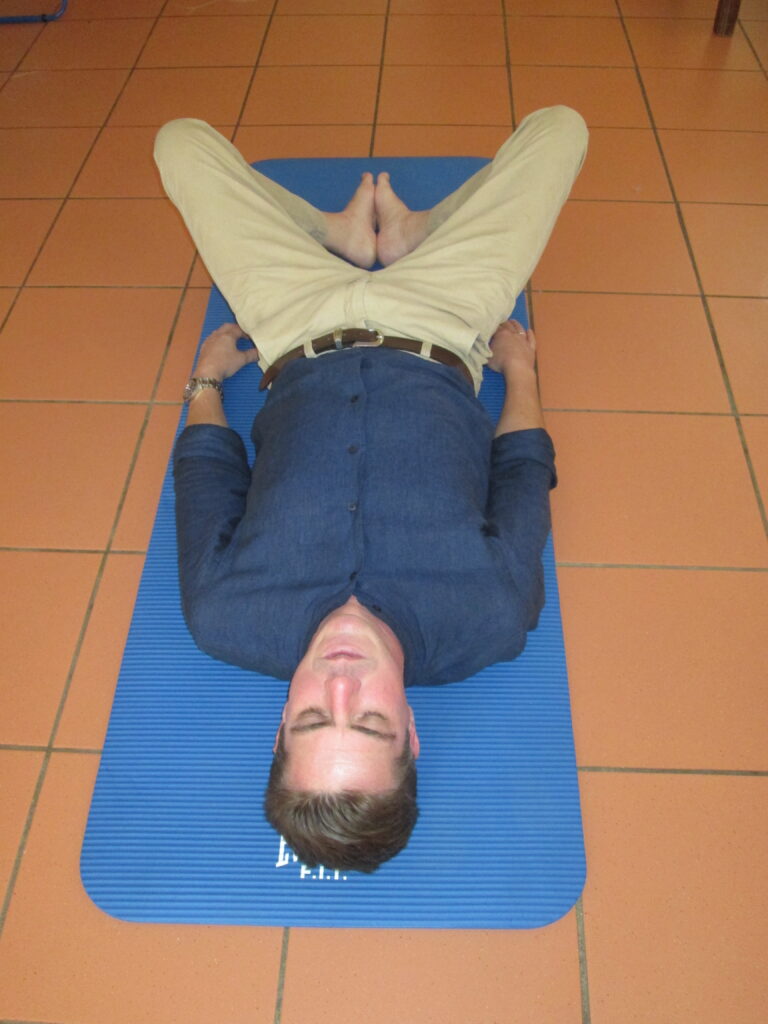
In this position, the person enters a restful state. After the mild stress of the previous exercises, the muscles start to relax with trembling or shaking. This movement is a natural response. It is what happens – or should happen – after any major shock or stress.
Many people are raised in a way that suppressed these tremors. We may even feel ashamed of them. Over the years, we may have learnt to hide our shaking or disconnect from it. This can mean the energy of the trauma and our primal response becomes stuck in our nervous system.
TRE is as simple as restoring the tremor response and learning to work with it to enhance our body’s healing ability and balance.
Is TRE good for everyone?
TRE is not the only way of releasing stress and trauma. It is safe and effective for many people, but some people benefit more from other approaches.
Any activity that gets us into a parasympathetic state, instead of the fight- flight (or freeze-fawn) state, can help us recover from trauma. These activities include
- muscle relaxation exercises
- massage
- creative hobbies
- journals and writing
- drumming
- music
- dance or movement
- walking in nature
Is TRE good for chronic pain?
Some people find TRE good for chronic pain. This kind of pain is linked to patterns of deeply stored tension in the body. Once the tension starts to release, the pain level drops.
Other forms of pain are not amenable to TRE. Some chronic pain is related to the immune system or the pain system itself. Examples are inflammation (e.g. arthritis), auto-immune conditions, low endorphin levels, mast cell disorder, allergies, nerve pain, and weak connective tissue. This pain is not just muscular or skeletal. TRE might not help all that much.
TRE releases the fascia. Not all pain arises from the fascia.
TRE may lead to beneficial shifts in stress hormones. This is overall a good thing and can reduce pain from some conditions.
Academic knowledge about which conditions do or do not benefit from TRE is limited at this time.
Based on my experience, TRE is not helpful for alleviating the pain of fibromylagia or connective tissue disorders. However, it is helpful for managing stress! Stress makes pain worse, so alleviating stress is good in that sense.
If you live with chronic pain or fatigue that has a medical cause (other than muscle or fascia tension), please consider getting treatment for the pain itself, rather than focusing mainly on stress and trauma. Chronic pain happens in different parts of our body and brain.
Nervous system regulation can be improved through TRE, but chronic pain is a more complex problem. TRE is not primarily a method of pain control.
Is TRE risky for people in pain?
TRE exercises involve mild twists and stretches to stimulate the muscles involved in fight-flight. For people with chronic pain, these movements may be problematic.
It’s true that we often have to endure some discomfort in order to benefit in the long term. For most people, that’s all TRE exercises are – mild discomfort. However, how can I (as the practitioner) be sure a client’s discomfort is not too deep? People who live with pain and fatigue are often good at pushing through or tuning out the sensations. This is unsafe during TRE.
Doing TRE can be a bit like jumping into the deep end of a pool. It’s a good idea to learn to swim first. You can ease into trauma release by taking the time to lie down (or sit in a comfy chair) for a few minutes and observe the way your body feels. Note how your breath moves in and out. Don’t try to change anything.
Don’t fight against sensations of pain. Just observe them. If you can do this exercise without feeling despair or panic, TRE may be safe for you to try. If you note a particular area of tension or pain, see if you can move your attention towards that part. Most of us try to move our attention away from it.
Can you be curious about the sensations, rather than trying to ignore or change them?
In summary
TRE is not a quick fix or one-size-fits-all method. Unrealistic hopes can work against recovery. Recovery from old trauma generally takes time and commitment.
TRE is a powerful method and therefore requires some caution. It is best not to try it on your own but rather learn the steps with the help of a registered TRE provider. Much of the information and videos one finds online are not created by registered providers. Please be discerning!

How many TRE sessions will I need?
You should have at least three sessions with a registered TRE provider before you start to do it alone at home. If TRE is done incorrectly, it can trigger an unwanted stress reaction.
Leave a Reply